
Choosing AI coding software: The most important criteria for hospitals

The market for AI coding software is growing rapidly, and vendor promises often sound the same: automation, accuracy, and secured revenue. However, the systems differ at their core. This article outlines the five criteria that truly matter when selecting AI coding software.

Das Thema kurz und kompakt
Evidence-based support: A coding suggestion without a corresponding reference from the patient record is difficult to defend during an audit. Every code requires a traceable source reference.
Human oversight: The software only prepares coding suggestions; the coding specialist reviews, corrects, and approves them. Responsibility for every code remains within your hospital.
Audit rates from 2027: In the future, health insurance companies will be allowed to have an unlimited number of bills audited by the Medical Review Board (MD) if the rate of undisputed bills falls below 50%.
Recare as a solution: Recare Coding provides a coding suggestion for every ICD and OPS code, including the supporting reference from the patient record. Your coding team reviews each suggestion, decides whether to accept it, and approves the case.
Why accurate coding is becoming a decisive factor
For coding specialists and medical controlling, every audit notification means additional work: The case must be reopened, the justification found in the patient record, and the appeal formulated.
On top of that, there is a regulatory tightening: With the GKV Contribution Rate Stabilization Act , the MD audit rates are rising for hospital billing starting in 2027. While the quarterly audit rate was previously capped at 15%, health insurance companies will be allowed to audit bills without limit in the future if the number of undisputed bills falls below 50%.
This additional audit burden will impact your already busy coding team. The following five criteria will help you identify software that provides relief exactly where it is needed.
Criterion 1: Traceability of coding suggestions
The accuracy rate of an AI is irrelevant in the event of an audit. What matters is whether every ICD and OPS code can be verified with the supporting documentation from the patient file. This is precisely where the various AI coding software providers differ most significantly.
Therefore, you should specifically check the following for every provider:
- Does the software provide the relevant section from the patient file for every coding suggestion?
- Are suggestions validated according to current coding guidelines?
- Does the software flag documentation gaps potential issues before the case is billed?
- Is every coding decision logged in an audit-proof manner?
Only when these four questions can be answered with "yes" can a coding suggestion actually be defended during an MD audit process.
Criterion 2: No coding without approval
Professional responsibility for every code remains with the hospital, even if software has prepared the suggestion. Software that bills cases without approval shifts the risk onto your coding team. The software should prepare coding suggestionswhile the medical coder reviews, corrects, and approves it.
Use the software provider's demo as a practical test: Who can change a suggestion? How easy is the process? And how is the change logged? Software that fails to answer these questions convincingly during a demo certainly won't answer them in day-to-day operations.
Criterion 3: Integration with HIS and existing databases
Coding software can only document what it can read. Findings, surgical reports, and medical reports are already available in your hospital, many of them as PDFs, scans, or free text. The software should be able to access all these sources directly.
Therefore, clarify the following questions when speaking with the AI coding software provider:
- Which HIS vendors are supported, and how does the connection work in practice?
- How are the coding results fed back into the hospital information system?
- Does the connection work without a complex interface project?
Also, ask who implements the connection: the coding software provider or the HIS vendor. A connection that only exists on the sales team's paperwork has no value in daily clinical practice.
{{banner}}
Criterion 4: Data protection, GDPR, and data residency
Coding is primarily about patient data. Before any coding software is used in your hospital, your IT management and data protection officers must verify that the processing complies with data protection requirements.
The mandatory criteria at a glance:
- GDPR compliance with documented technical and organizational measures (TOMs)
- Role-based access rights, separated by facility and module
- Necessary certifications, such as ISO 27001 or a C5 Type 2 attestation according to BSI standards
- Data processing exclusively in German data centers, with no transfer to third countries
Two questions for providers should be part of every initial meeting: Are patient data used to train general models? And how does the provider ensure compliance with the EU AI Act?
Criterion 5: Evaluate cost-effectiveness holistically
The cost-effectiveness of coding software stands or falls on two metrics: the time saved per case and the additional revenue from more complete coding. An integrated grouper should make both visible before the invoice is even issued. To do this, the DRG and case value in euros are determined for each case, and potential points of contention for the Medical Review Board (MD)—such as secondary misallocation—are highlighted early on.
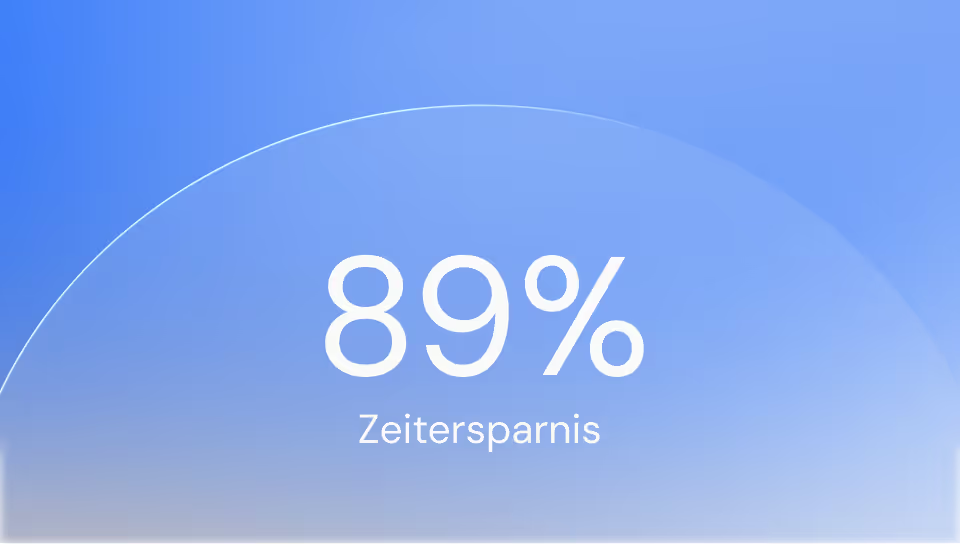
In addition, calculate the total effort involved—not just the time saved per case, but also the costs for implementation, team training, and the licensing model. Time savings of up to 50% per case is a realistic benchmark, but it does not replace your own internal calculations.
Recare Coding: Coding suggestions with supporting evidence directly from the case file
Recare Coding focuses on coding and billing and meets the five selection criteria from this article: For every ICD and OPS code and additional reimbursement, the solution provides the relevant documentation from the case file. A licensed grouper determines the DRG and case value in euros before the invoice is issued and provides early warnings about potential MD points of contention, such as secondary misallocation.
Your coding team reviews every suggestion, decides whether to accept it, and releases the case. Until it is released, every coding suggestion remains a draft: the clinical decision always rests with the team, never the software.
Conclusion: How to identify the right AI coding software
You can identify good AI coding software primarily by the fact that it finds the relevant supporting evidence for every coding suggestion from the case file and can access the case documentation in your HIS directly. This is complemented by GDPR-compliant processing of patient data and an integrated grouper that displays the case value and potential points of contention before the invoice is issued.
Recare Coding is designed for exactly this: your coding team reviews the suggestions, approves them, and has the justification directly from the file at hand in the event of an audit, all without changing existing workflows. Every claim substantiated in this way lowers the rejection rate and thus the audit rate, which will apply to your hospital starting in 2027.
{{banner}}
Häufig gestellte Fragen


Name
Unternehmen
Impluse mitnehmen. Nächste Schritte planen.
Setzen Sie KI dort ein, wo sie echten strukturellen Mehrwert schafft. Wir begleiten Sie dabei.